New partnership with GEA
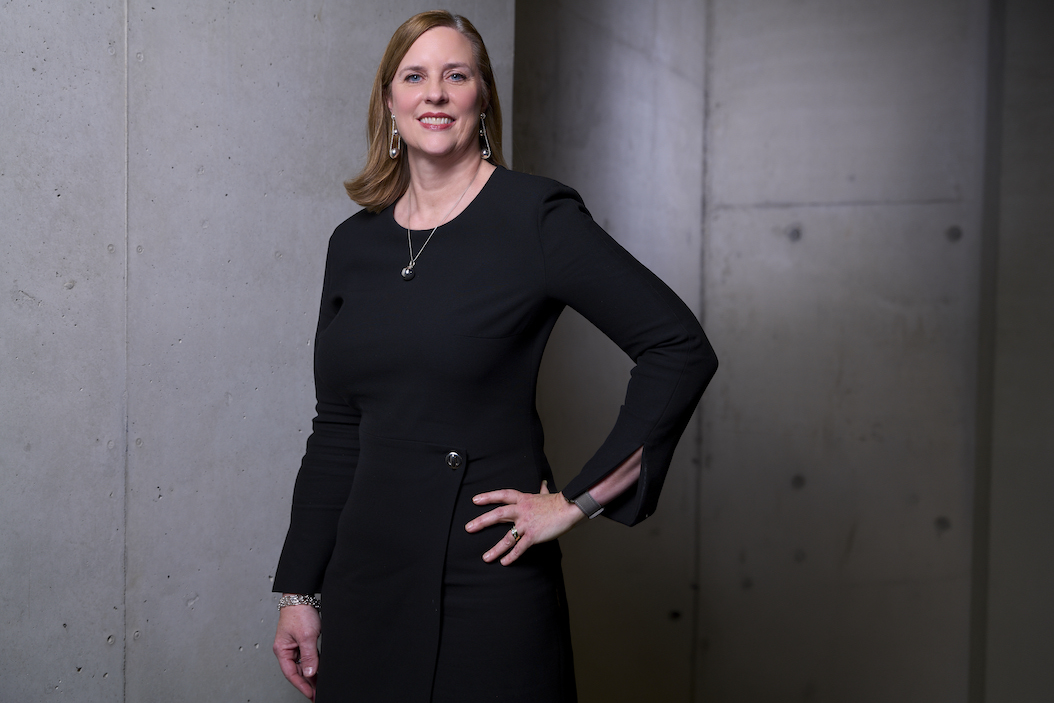
We are pleased to introduce GEA as a new partner company of the Academic Society and give a warm welcome to Jill Meiburg who is joining our Corporate Advisory Board as a new member.
Jill has led Group Communications & Brand at GEA since November 2020. In this role, she has been responsible for, among other things, a global brand refresh in 2022 and the communications surrounding GEA’s inclusion in the DAX in 2025. She also serves as Managing Director of the GEA Foundation.
Prior to this, she spent 14 years in various leadership positions in corporate communications at Deutsche Post DHL Group, most recently as Senior Vice President Sustainability Communications and Programs. She began her career at Deutsche Telekom AG, where she worked in international communications and marketing, with postings in Bonn and New York City. Born in the United States, she studied in Los Angeles and Tübingen and completed her Master of International Affairs at Columbia University in New York.
Jill was awarded the EACD Communications Leadership Award 2026 in recognition of her outstanding contributions to the communications profession. The award honors her visionary leadership, meaningful innovation, and lasting impact on the field.
Talking business & getting personal
We spoke to Jill, among others, about her journey into communications and how her perspective on the profession has evolved. She also shared insights into the topics and developments that are currently on her mind.
What originally drew you to corporate communications? How has your perspective on the role evolved – particularly in a global B2B environment like GEA?
1992 was a pivotal year in my life. I fulfilled my dream of studying abroad and mastering a foreign language. That has been a transformational experience that confirmed my desire to work in an international environment. My private sector experience as a Robert Bosch Fellow in Germany helped me discover my passion for corporate communications. I found a profession in which my well-honed journalistic and analytical skills, language abilities, and deep interest in international affairs could fully converge.
The field and the role of Chief Communications Officer have gained in strategic importance. In a volatile and uncertain world, we are the guardians of purpose, giving people stability when everything else feels unstable. We are the shapers of transformation. And almost every organization today is in the middle of change. We are reinventing our own profession through AI. Judgment and strategic counsel are becoming the job. And we are the facilitators of hard conversations, helping our boards navigate complexity. All of that that takes brave leadership, which I view as a team sport.
GEA operates largely behind the scenes of global production while at the same time driving transformation and sustainability. What does effective and credible communication look like in such a context?
Effective communication in that context starts at the top. The tone a CEO sets is the foundation of credibility. And that tone has to be consistent. Not just in what is said, but in what is done. Particularly in sustainability, where greenwashing risk is real and audiences are increasingly sophisticated, words without evidence are a liability. Our communications in this space are built on hard facts, verified data, and the discipline of delivering what we promise. That commitment extends to our customers, our partners, and especially the capital markets. Credibility, once lost, is very hard to rebuild.
But rigor alone doesn’t build a brand. Even as a B2B company – perhaps especially as a B2B company – you have to reach people emotionally. The engineers and procurement directors and sustainability officers making decisions about our technology are human beings. They want to believe in the companies they work with. That is where our brand has been decisive. Aligning everything we do to our purpose – Engineering for a better world – gives us a coherent story that goes beyond product features or business results. It creates what I’d call stakeholder intimacy: a sense that GEA stands for something, and that engaging with us means being part of something larger than a transaction. Effective communication for a company like GEA is the combination of all three elements. It brings together tone and integrity from leadership, evidence-based accountability, and an emotional connection anchored in an inspiring purpose.
From your experience, where can collaboration between academia and corporate practice most meaningfully improve how we approach communication today?
The answer for me lies in an area I would describe as “sensemaking.” The topics we’re being asked to navigate are complex. And we often don’t have time to think deeply enough about them. That’s where academia can be a valuable partner, providing us with mental models and research-based insights. It offers historical perspectives while challenging our assumptions. On tech-driven topics: there’s always the temptation to be influenced by the hype cycle. Academic rigor helps us here. Credible communication on these topics involves making them accessible, but we should never amplify what we don’t understand. Collaboration with academia can also help us see around corners and anticipate developments that haven’t surfaced yet in our day-to-day work.
Which professional experience, particularly from your international roles, has most shaped your understanding of leadership and communication in organizations?
The past 5-plus years at GEA have been particularly formative. GEA has been on a fast growth trajectory, fueled by a deeply entrepreneurial, high-performance culture. You are given trust and freedom, but you have to deliver. Honestly speaking, there’s no hiding behind layers of process or hierarchy and no room for ego and hubris. This has pushed me to grow as a leader. It means building and trusting great teams and maintaining strategic clarity under pressure (and I am convinced that we still need communications strategies!). It has been the most challenging chapter of my career, and also the most rewarding.
Is there a recent idea, debate, or development that has particularly influenced your thinking?
I am, on balance, an AI optimist. The technology is real, the potential is enormous, and I think communications leaders who resist it entirely are making a strategic mistake. But optimism doesn’t mean uncritical acceptance. And the development that concerns me most right now – both in the workplace and in society at large – is what I’d call the hyper-humanization of AI. The deliberate elevation of agents and bots to the status of human colleagues, companions, even intimate partners. We seem to be forgetting the “A” in AI. It is artificial. And that distinction matters enormously. When organizations start onboarding AI agents as though they were employees, or when we celebrate chatbots as a solution to loneliness, we are not solving a human problem – we are papering over it.
The MIT psychologist Sherry Turkle has been raising this alarm for years. Her recent book Artificial Intimacy makes the case with striking urgency. She warns that as chatbots offer themselves as best friends, therapists, and companions, we begin to accept the mere performance of empathy as empathy itself – and that this is producing a generation that is more alienated and lonely than ever. Her phrase for it is exactly right: we are not building connection, we are building artificial intimacy. And there is a profound difference. In my view, human ingenuity is imperfect. Human relationships are messy and demanding. But that is precisely their value. I would still place my bets on human intelligence, human creativity, and human connection – with AI as a powerful tool in service of all three. Not as a substitute for any of them.
Looking back on your career, what is something you once believed about corporate communications that you have since had to rethink or unlearn?
When you enter the field of corporate communications from journalism, you bring a journalist’s instincts with you. That is usually an asset. But it can also lead you to believe that the job is about controlling and perfecting the message. Strategic communications operates on an entirely different level. We orchestrate a complex, stakeholder-driven agenda and challenge ourselves to measure impact, not just output. The journalist in me learned over the years just how important this is, and that when the comms strategy delivers for the business, it becomes a genuine strategic resource – not just a mouthpiece or a “packaging” function. It drives organizational performance.
Thank you, Jill! We are delighted to welcome you to the Academic Society and sincerely appreciate your valuable contributions. We look forward to collaborating with you and continuing to learn from your expertise and insights.
GEA is one of the world’s largest systems suppliers for the food, beverage and pharmaceutical sectors. With the support of four business divisions and more than 18,000 dedicated employees, GEA generates over five billion euros in revenue in more than 150 countries.
Their portfolio includes machinery and plants as well as advanced process technology, components and comprehensive services. Used across diverse industries, they enhance the sustainability and efficiency of production processes globally.
In June 2023, GEA Group was named “Corporate Brand of the Year” by the German Design Council (Rat für Formgebung).
You can find all the partner companies on the Corporate Advisory Board here.