New on our Corporate Advisory Board: Nina Schwab-Hautzinger
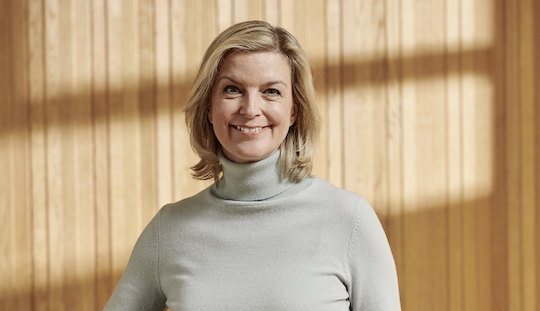
We are delighted to announce that Nina Schwab-Hautzinger, Head of Group Communications at Roche, is a new member on our Corporate Advisory Board.
Nina has been Head of Group Communications at Roche since February 2026. Before returning to Roche, she served as SVP, Corporate Communications & Government Relations at BASF from 2020 to 2026. Before taking on that position, she already held several communications leadership positions at various locations of Roche, including Global Head of Corporate Brand & Communications and Head of Communications & Public Affairs at Roche Pharma in Germany. Earlier in her career, Nina also worked as an Associate and Account Director at Hill+Knowlton Strategies in Singapore. She began her professional career as a Junior Consultant at Wirz Identity AG in Zurich.
Nina studied German Literature in Canada and German Literature, Media and Communications, and Sociology in Mannheim. In 2002, she earned her doctorate at the University of Zurich. Her achievements have been recognized with the “Spokesperson of the Year” award in the Chemical and Pharmaceutical sector in 2021, 2022 and 2025. In 2021, she received the German Image Award.
Talking business & getting personal
In a recent conversation, Nina shared her thoughts on upcoming developments in corporate communication and what makes healthcare debates so nuanced. She also gave us a glimpse into what helps her recharge personally.
In a global organization, narratives often need to travel across very different markets. Where do you see the biggest need to adapt messages for the DACH region?
A global unified positioning is essential because it gives us consistency and a clear voice as an organization. In order to truly resonate, it needs to connect with the realities of each market. For our industry, the biggest need in the DACH region is to translate global messages into the local healthcare and societal context – with clarity, evidence and relevance.
Healthcare debates here are often very nuanced: around innovation, affordability, access, the sustainability of health systems and the role of our industry. So it is not enough to simply say that innovation matters. We need to explain why it matters, what value it creates for patients, society, and healthcare systems.
Trust is a critical currency in healthcare. What does building and maintaining trust look like in your day-to-day work?
Building trust starts with listening first: to patients, colleagues, healthcare stakeholders and the teams closest to the work. It also means being clear and transparent, especially when topics are complex or when there are no simple answers.
In healthcare, building trust requires a comprehensive approach rooted in credibility, responsibility, and consistency. Our communication therefore needs to be grounded in facts, while also remaining human-centric and clear. We need to create clarity in complexity, explain the value of innovation with all stakeholders in mind, and at the same time, be transparent about the time, investment and risk that research involves.
Looking ahead: Which development will most fundamentally change healthcare communication in the next few years?
The development that will most fundamentally change healthcare communication over the next few years is AI. Generative AI is rapidly transforming science as well as how our stakeholders engage with our content. For communicators, what becomes even more important, is building and maintaining trust through authenticity. Our role is to become savvy in the application of AI in our work and continuously stay abreast of developments, to leverage AI to increase the strategic value of our function and to use this technology meaningfully and responsibly.
What early experience still influences the way you work today?
Early in my career, I had the opportunity to work closely with patient organizations. Hearing firsthand what it means to live with a serious illness fundamentally shaped my perspective. It reinforced that every decision we make ultimately has an impact on people and their loved ones. That experience continues to guide me and aligns perfectly with Roche’s purpose of doing now what patients need next.
What personal passion energizes you outside of work?
Traveling with my family is what helps me recharge. Experiencing new places and cultures gives me fresh perspectives and inspiration, while creating memories together is something I truly value. Stepping outside of my everyday routine often brings new ideas and reminds me how important connections and openness are in both life and work.
What is something people are often surprised to learn about you?
I don’t think people are often surprised because I tend to be very open and straightforward. I believe authenticity is the foundation of trust. Leaders do not need to have all the answers, but they do need to be genuine, ask the right questions, and be willing to have honest conversations.
A warm welcome to the Academic Society, Nina! We look forward to many more inspiring exchanges and to learning from your insights throughout our collaboration.
Roche is a healthcare company placed to prevent, stop and cure diseases by uniting leading science and technology across diagnostics, medicines and digital solutions. The company was founded in Basel, Switzerland in 1896 and is now a leading provider of transformative medicines and diagnostics for millions of people in over 100 countries around the world. It is dedicated to tackling healthcare challenges that place the greatest strain on patients, families, communities and healthcare systems. Across its Diagnostics and Pharmaceutical divisions, Roche focuses on areas including oncology, neurology, cardiovascular and metabolic diseases, ophthalmology, infectious diseases and immunology. The aim is to provide real and positive change for patients, the people they love and the professionals who care for them.
You can find all the partner companies on the Corporate Advisory Board here.