Thomas Biegi becomes a member of our Corporate Advisory Board
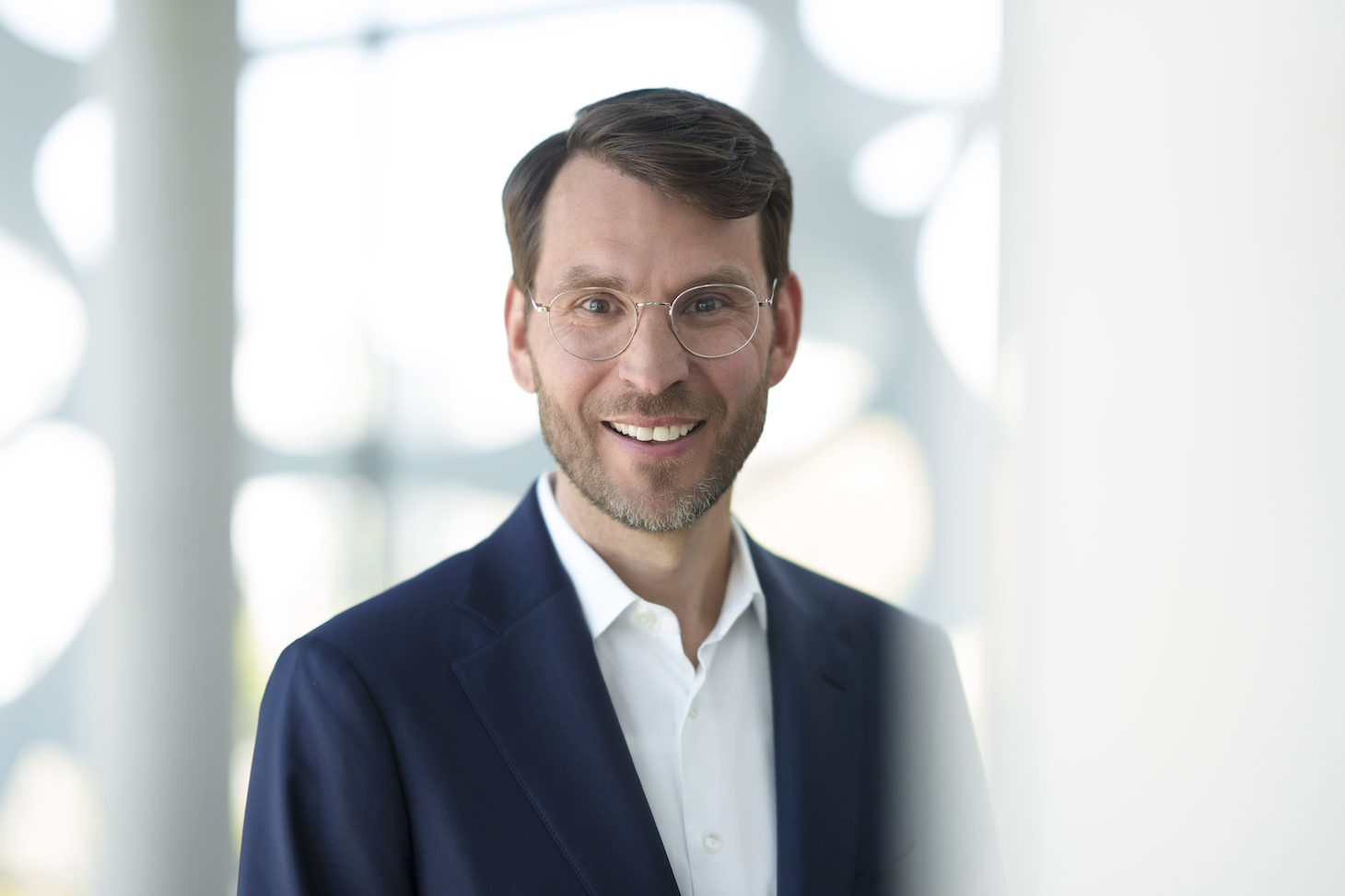
We are delighted to welcome Thomas Biegi, Senior Vice President Corporate Communication & Government Relations at BASF, as the newest member of our Corporate Advisory Board.
Thomas is a seasoned Corporate Affairs leader with extensive experience across the global pharmaceutical and biotech industry. Before taking on his new position at BASF in April 2026, he was Head of Communications and Government Affairs for the pharmaceutical company GSK in Germany. Prior to this role, Thomas was Senior Vice President, Head of Corporate Affairs, and member of the Executive Committee at the biotech company MorphoSys. There, he led communications during the company’s transformation and acquisition by Novartis. He held multiple senior positions at Pfizer, where he directed communications for the company’s global Oncology group and managed Pfizer’s communications team in Germany.
Thomas holds a Bachelor of Arts in Business Administration and a Master of Arts in Media and Communication Studies from the Freie Universität in Berlin.
Talking business & getting personal
How do we stay focused when change becomes a constant? Thomas Biegi shared his thoughts on how transformations become real and what value exchanging knowledge has with us. He also gave insight into what helps him to keep a level head.
BASF operates globally across diverse markets. What is key to making communication work across regions while staying locally relevant?
Global communication works when it gives people a shared sense of direction – without ignoring the realities they face locally. As a global player at the heart of many industries, at BASF these realities can be very different. For us, this means one thing above all: explaining more. Why we must invest in Asia, why we need to consolidate in Europe, which businesses to keep. Also, which to divest, how can we maximize the opportunities of AI, how do we work together in the future.
That is why I believe in integrated and open communication that works across functions, topics, channels and geographies. When we combine a strong global narrative with local insight and execution, communication creates reliability, relevance and ultimately business value.
Transformation is a major focus for many companies today. What can communication do to make change tangible and understandable for employees?
Transformation only becomes real when people understand what it means for them personally. That is where communication makes a difference. We translate strategy into relevance, explain the why behind change and create space for dialogue. Especially in uncertain times, people need more than information. They need guidance they can rely on.
I believe communicators are at their best during periods of change. Our job is to make complexity understandable, connect people to a common purpose and help organizations move forward with confidence. We don’t simply communicate about transformation, we need to help people navigate it.
You emphasized knowledge sharing and exchange. What helps communication teams learn from each other and apply insights in their day-to-day work?
Knowledge sharing starts with a simple mindset. We do not have to solve everything alone. Communication teams often face similar challenges, even in very different markets or functions. When we share what worked – and what did not – we move faster and make better decisions.
The foundation for that is openness and trust. People share knowledge when they feel that collaboration is valued more than competition and that different experiences and perspectives are welcome.
As you step into your new role, what has been a moment or insight that has particularly stayed with you?
One thing that has stayed with me is the openness and professionalism of the global communication community at BASF. From day one, I was impressed by the depth of expertise across different disciplines and regions as well as by the willingness of colleagues to support each other.
At the same time, I quickly realized how much change many people are navigating right now. What struck me is the resilience and commitment I see across the organization despite that uncertainty. It reinforced my belief that strong teams can achieve remarkable things. When people trust each other and work toward the same ambition, there’s no shortage of what they can accomplish.
In times of constant change, what personally helps you stay focused and grounded as a leader?
What keeps me grounded is staying close to people and close to the business. Listening carefully helps me understand where communication can create the greatest impact. As a leader, I try to give direction, remove obstacles and create the trust my teams need to make good decisions even when not everything is certain.
Finally, I remind myself that change is not something we occasionally manage in communications. Change is something we work with every day. That perspective helps me stay optimistic and focused on solutions.
What aspect of your work in communications do you find most meaningful or motivating on a personal level?
What motivates me most is that communication can make a real difference – for the business and for people. We help create clarity where things are complex, build confidence in times of change, and connect people around a shared purpose.
On a personal level, what matters most to me is that I can be my best and my full self at work. As a leader, I want to create an environment where others can do the same to develop and succeed. I find it most rewarding when teams feel empowered to bring in ideas, challenge each other constructively, and see the impact of their work.
It’s great to have you with us, Thomas! We look forward to the perspectives you will contribute to the Academic Society and to the exchange of knowledge and ideas across our network.
BASF creates chemistry for a sustainable future. The company’s ambition is to be the preferred chemical company to enable their customers’ green transformation. The company combines economic success with environmental protection and social responsibility. Around 112,000 employees in the BASF Group contribute to the success of their customers in nearly all sectors and almost every country in the world.
The portfolio comprises the segments Chemicals, Materials, Industrial Solutions, and Nutrition & Care; the standalone businesses are bundled in the segments Surface Technologies and Agricultural Solutions. BASF generated sales of €65.3 billion in 2024.
You can find all the partner companies on the Corporate Advisory Board here.